Most people who look into ear surgery have been thinking about it for a long time. Years, in some cases. Having disproportionate or sticking-out ears is not the kind of thing that bothers someone for a week and then goes away. It sits quietly in the background - in photographs, in certain hairstyles avoided, in hats worn for reasons that have nothing to do with the weather.
What surprises most people when they finally look into it is how much otoplasty can actually address. It is not one single operation. It covers a range of procedures that reshape, reposition, or reconstruct the outer ear depending on what the problem actually is.
Here are seven of the most common concerns Otoplasty deals with.
Important: All information in this article is general and educational in nature. It is not a substitute for professional medical advice, diagnosis, or treatment. Anyone considering ear surgery should consult a qualified and experienced cosmetic surgeon who can assess their individual anatomy, medical history, and suitability for any procedure.
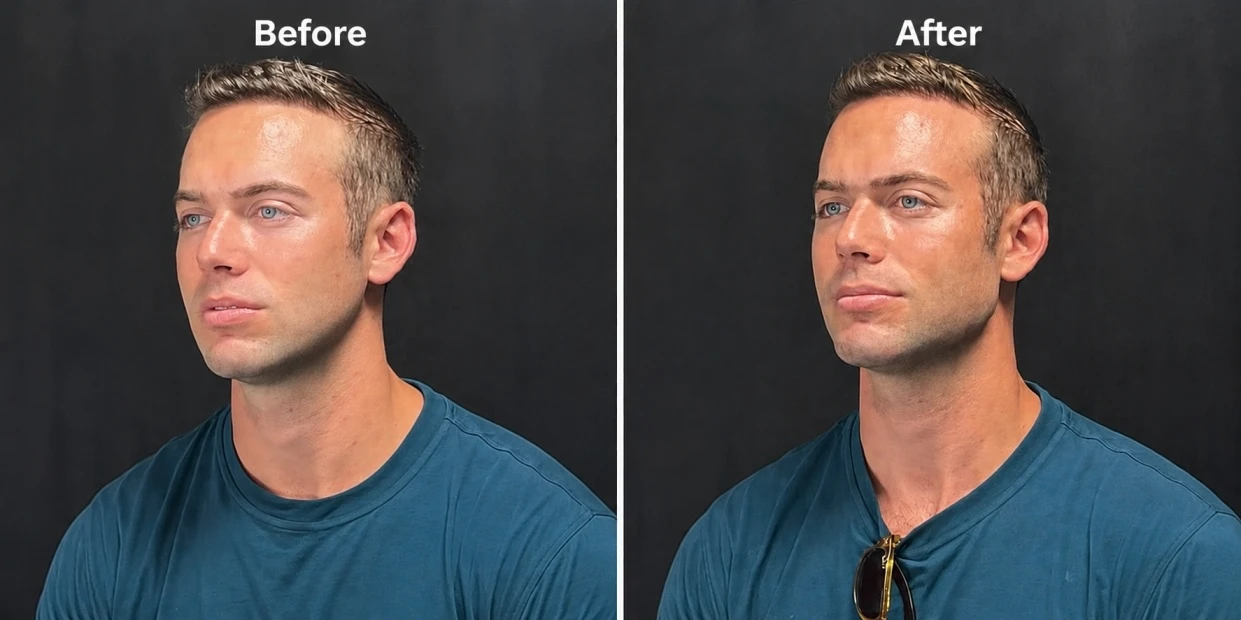
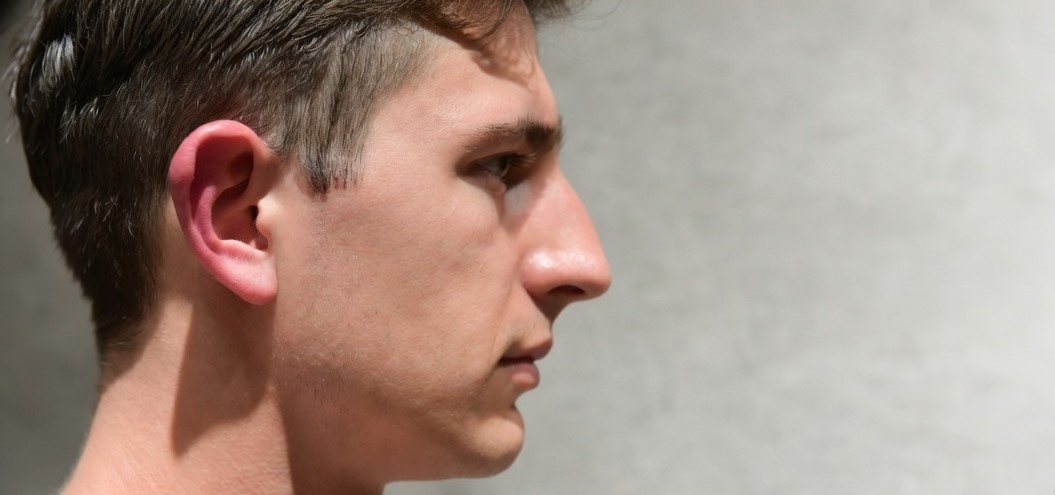
This is the most common reason people book a consultation. Ears that protrude significantly - further from the head than feels proportionate - are almost always caused by one of two things. Either the antihelical fold, a natural ridge near the front of the ear, did not develop properly, or there is too much cartilage in the conchal bowl, the cup-shaped area closest to the head.
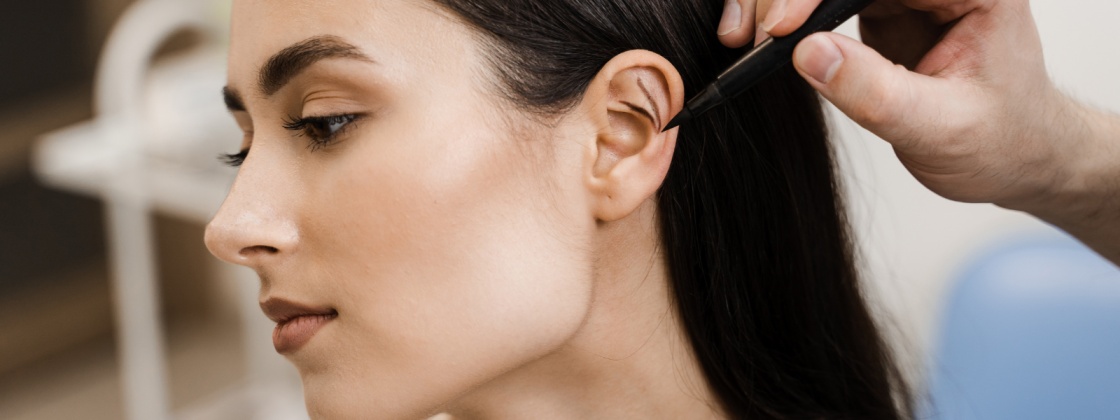
Surgery reshapes or repositions the cartilage so the ears sit closer to the head. The incision goes in the natural crease behind the ear where it is hidden. Both ears are usually treated together even if only one feels noticeably prominent - symmetry matters and a surgeon will assess both.
No two ears are the same and that is true for everyone. But when one ear sits noticeably higher, lower, or at a different angle to the other, the imbalance shows - even if most people looking at the person cannot quite name what looks off.
Correcting asymmetry requires looking at both ears individually and in the context of the whole face. Sometimes both ears need work. Sometimes only one needs adjusting. A skilled cosmetic surgeon aims for balance that fits the face rather than just making one ear match the other.
Some people have ears that sit perfectly flat against the head but are simply larger than feels right for their face. This is called macrotia and it is different from ears that protrude.
Ear reduction surgery removes small sections of cartilage and skin to bring the overall size into better proportion with the face. Getting this right requires a solid understanding of ear anatomy - the goal is an ear that looks natural, not an ear that looks reduced.
This one comes up more often than people expect. Years of heavy earrings gradually stretch the piercing hole or split the lobe. Gauging leaves an opening that will not close on its own. A single incident of an earring getting caught can tear the lobe cleanly.
Earlobe repair is straightforward and often done under local anaesthetic. The tissue is trimmed and sutured back together neatly. Recovery is quick. Most patients who want to re-pierce are advised to wait around six weeks for the tissue to heal properly first.
Cupped ears - also called lop ears - are where the outer rim of the ear appears folded over, tight, or smaller than it should be. The degree varies from mild to quite noticeable.
Mild cases usually involve releasing and reshaping the existing cartilage. More significant constriction sometimes needs cartilage grafting - a small piece taken from behind the ear or the rib area - to reconstruct the rim and restore a fuller shape. Results are generally very good when the surgeon has genuine experience in ear reconstruction.
Cauliflower ear develops from repeated trauma to the outer ear - common in rugby, boxing, wrestling, and martial arts. Blood pools between the cartilage and skin and if it is not drained quickly, it hardens and the cartilage loses its normal shape permanently.
Once the deformity has set, otoplasty surgery removes the hardened tissue and reshapes the outer ear to restore a more natural contour. Otoplasty results depend on how long the condition has been there and how much cartilage was affected. Many patients also find that addressing it removes a persistent heaviness or pressure they had stopped noticing over time.
Microtia is a condition where one or both ears did not develop properly before birth, sometimes present as a small piece of tissue, sometimes absent entirely. It affects roughly one in every six to twelve thousand births and can affect hearing as well as appearance.
Reconstruction for microtia is among the most complex procedures in plastic surgery. The most established approach builds a new ear framework from rib cartilage and implants it beneath the skin in stages. A prosthetic ear anchored by small titanium implants is another option for some patients.
That depends entirely on how much the concern affects daily life and how long it has been there. Ear surgery produces genuinely meaningful results for the right patient and recovery is more manageable than most people expect going in.
Most patients are back at a desk within a week. Normal activity resumes within two to three weeks. A soft headband is worn while healing - most patients find it far less inconvenient than they imagined.
If you have been thinking about otoplasty surgery for a while, the best next step is a consultation. Book a consultation with Dr. Jain at Aesthetic & Cosmetic Surgeons and get a clear, honest picture of your options.
This article was written and reviewed by a qualified cosmetic surgeon at Aesthetic & Cosmetic Surgeons. It is intended for general informational purposes only and does not replace personalised medical advice. Surgical outcomes vary between individuals. All procedures carry risk. A full discussion of risks, benefits, and alternatives will take place during your consultation before any decision is made.

ROYAL COLLEGE OF
SURGEONS

MEDICAL UNIVERSITY OF SOUTH
CAROLINA

UNIVERSITY OF SOUTHERN
CALIFORNIA

AMERICAN ACADEMY OF
COSMETIC SURGERY

AMERICAN SOCIETY OF
LIPOSUCTION SURGERY