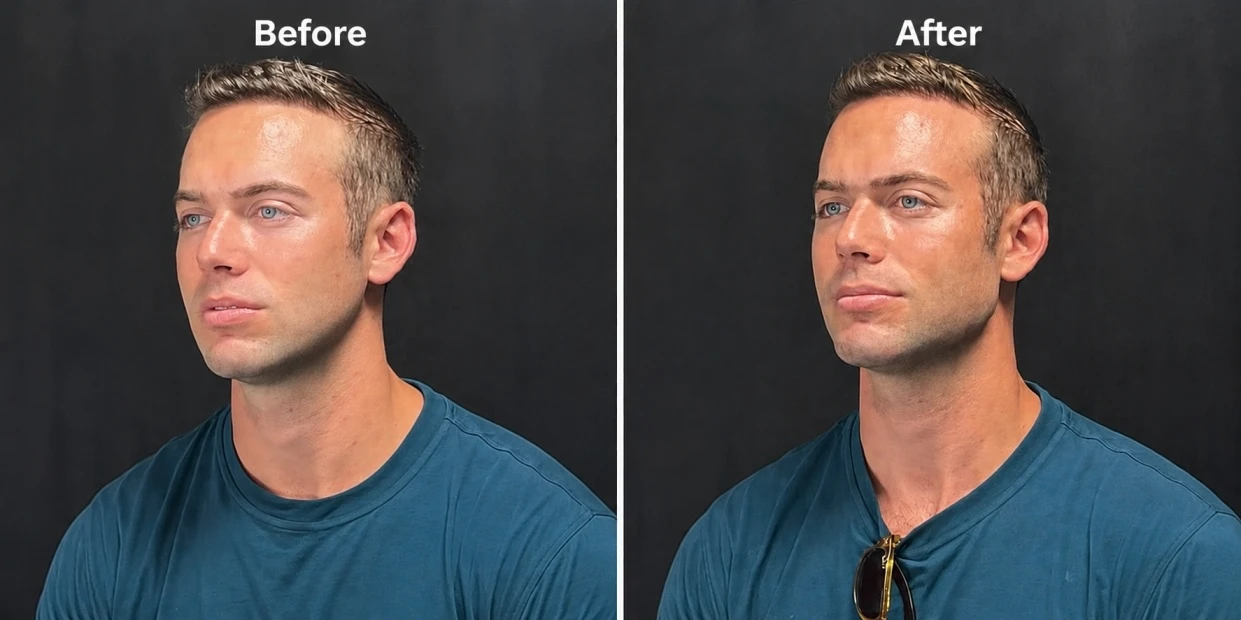
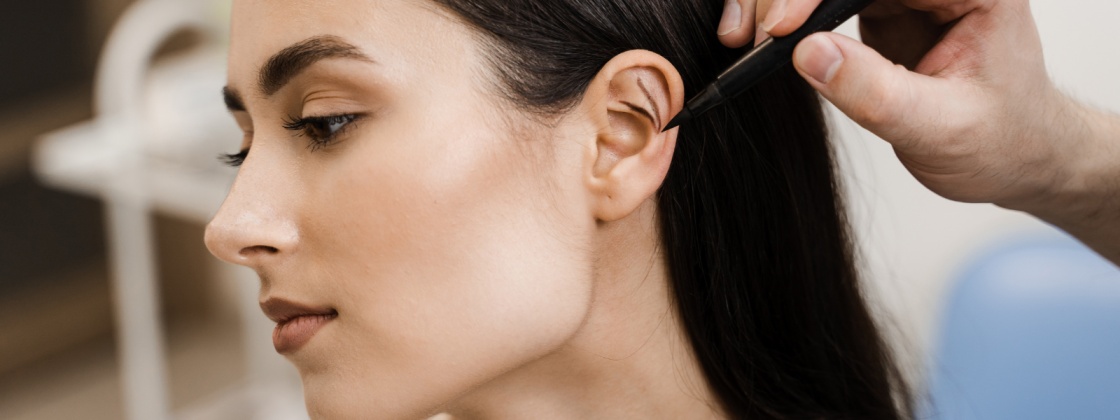
The majority of the individuals who walk in with a concern about ear surgery have always contemplated their ears since they were kids. Not obsessively. Not every day. But it's there. The haircuts chosen to cover them. The way photos are angled. The hats. The specific way certain hairstyles get worn year-round, even in LA summer heat, because the alternative feels worse.
Ears are one of those things where the concern is almost always quieter than the actual impact. Nobody speaks much about it, as it sounds mundane. But ears that stick out, are asymmetric, or have an unusual shape sit right at the centre of the face - visible in every conversation, every photo, every mirror.
Otoplasty surgery is the procedure that addresses this. And it's one of the more straightforward surgeries in facial cosmetics, with a recovery that's genuinely manageable and results that tend to be permanent.
Here's the full picture.
The term "ear surgery" covers a few different concerns, and it's worth being specific because the technique varies depending on what's being addressed.
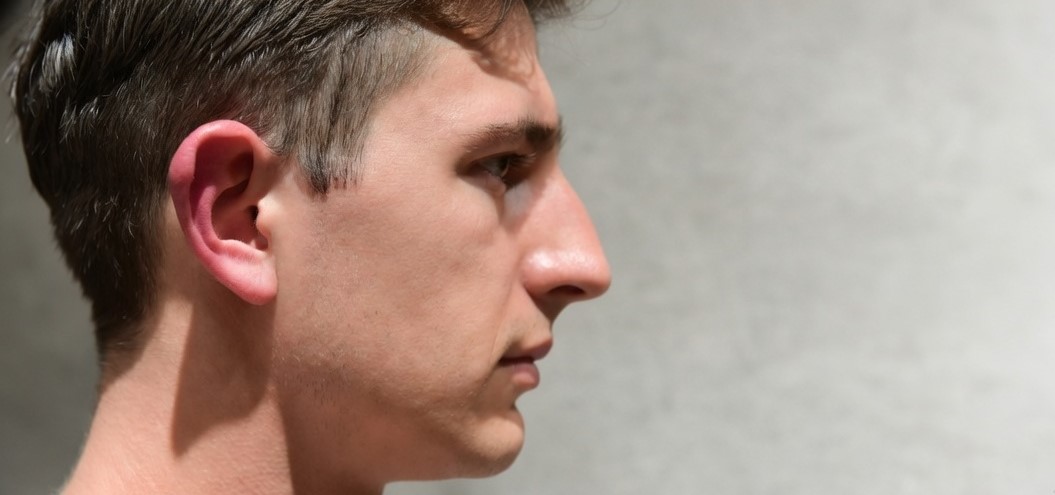
Protruding ears - ears that stick out beyond approximately 2 cm from the side of the head are the most common reason people come in. This is practically always due to an underdeveloped antihelical fold (the inner ridge of the ear, which forms a natural curve drawing the ear into the head) or to overgrowth of the cartilage in the conchal bowl (the deep cup-shaped portion of the ear). Sometimes both.
Ear asymmetry is another frequent concern. One ear sits noticeably higher, lower, or further out than the other. In many cases, the person has adapted their entire self-presentation around it without fully realizing the degree to which it's affected their choices.
Macrotia - ears that are proportionally large relative to the face - is a different matter. Unlike protrusion correction, it requires actual cartilage removal and is a more involved procedure.
Structural irregularities - cupped ears, lop ears, shell ears, or ears with unusual folds - fall into a separate category and are handled on a case-by-case basis depending on the anatomy.
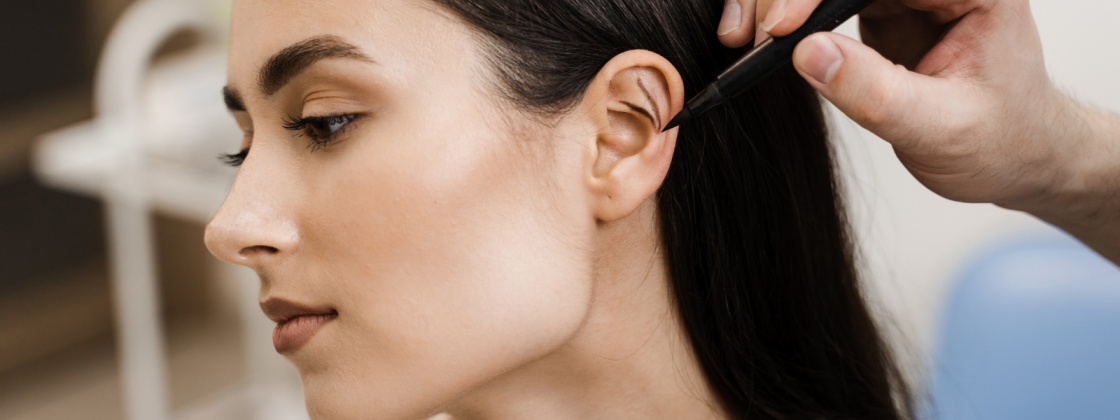
For the most common scenario - ears that protrude - the incision is made in the natural crease behind the ear where it meets the head. That placement means scarring is essentially invisible once healed.
Through that incision, the cartilage is accessed and reshaped. If the antihelical fold is underdeveloped, it's recreated, either through scoring the cartilage in such a manner that it folds in the right shape or through permanent sutures that will keep it in the right position. If the conchal bowl is too deep, part of that cartilage is repositioned or removed.
The ear is then positioned nearer to the head at a right angle, and the incision is stitched. Both ears are done at the same time, even when only one is the major issue, because adjusting one without accounting for the other usually produces an uneven result.
The estimated duration of the entire process is 2 hours. Local anesthesia with sedation is used - no general anesthesia required.
A soft headband is worn for the first week to protect the ears and keep them in position while the initial healing sets. After that, a lighter headband is worn at night for another month - mainly to prevent accidentally folding the ear forward while sleeping.
Bruising and swelling peak in the first few days and settle significantly by the end of week one. Most adults are comfortable being seen publicly at the 10 to 14-day mark.
The ears feel tender and slightly numb for several weeks. That's normal and temporary. Sensitivity returns gradually as the nerve endings settle.
Strenuous activity gets avoided for about 3 weeks. Contact sports and anything with a risk of impact to the ear should be avoided for at least 6 weeks.
The final result is visible within a few weeks. Unlike rhinoplasty, there's no year-long wait for swelling to fully resolve. What you see at 6 to 8 weeks is very close to the permanent result.
With proper technique, otoplasty results are permanent. The cartilage is physically reshaped and held in its new position by sutures and by scar tissue that forms during healing - both of which keep the ear in place long-term.
The small risk of partial recurrence - where the ear moves slightly forward again during healing - is most often a technique issue. Using sutures alone without any cartilage scoring has a higher recurrence rate than techniques that combine both. This is worth asking about, specifically when researching surgeons.
Natural aging of the skin and soft tissue continues, but the cartilage position itself doesn't meaningfully change after a well-performed otoplasty.
There is no age ceiling. Otoplasty is performed on patients in their 40s, 50s, and beyond. The right time is when the concern is affecting quality of life enough to warrant doing something about it.
Whether the technique being used involves scoring, sutures, or both - and why. This has an impact on how long the outcome will last.
Whether both ears will be assessed and adjusted, even if only one feels like the problem. Treating one ear in isolation without accounting for the other almost always creates a new asymmetry.
What the revision rate looks like for the surgeon's otoplasty cases. Revisions happen - the question is how often and why.
What does the Otoplasty aftercare involve specifically? The headband protocol during the first month is where most patients underestimate what's required, and rushing it is the most common cause of preventable complications.
*This article is for informational purposes only and does not constitute medical advice. Individual results may vary. Always consult a qualified and licensed cosmetic surgeon before making any decisions regarding surgical procedures.*

ROYAL COLLEGE OF
SURGEONS

MEDICAL UNIVERSITY OF SOUTH
CAROLINA

UNIVERSITY OF SOUTHERN
CALIFORNIA

AMERICAN ACADEMY OF
COSMETIC SURGERY

AMERICAN SOCIETY OF
LIPOSUCTION SURGERY