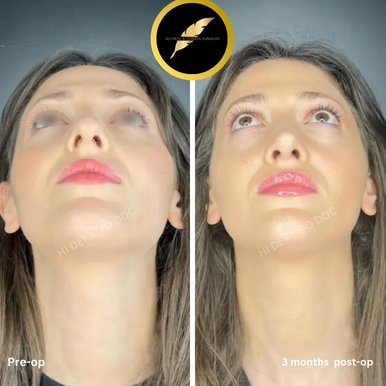
Non-surgical rhinoplasty is a well-tolerated procedure with a strong safety profile when performed by a trained practitioner. However, all injectable procedures carry risks that every patient should understand before deciding to proceed.
Common, expected side effects: Mild redness, tenderness, and occasional bruising or swelling at the injection sites. These typically resolve within 24 to 72 hours.
Filler migration: In rare cases, filler may shift slightly from the injected area over time. This is more common with excessive filler volumes and is minimised through precise injection technique and conservative dosing.
Asymmetry: Minor asymmetry is possible after any filler treatment. If it occurs, it can typically be corrected at a follow-up appointment or reversed with hyaluronidase.
Vascular occlusion: This is the most serious but rare complication of nasal filler injections. It occurs when filler inadvertently enters or compresses a blood vessel, which can restrict blood flow to the nasal skin. The nose has a complex vascular anatomy, which is why this procedure should only be performed by a practitioner with advanced injector training and a thorough understanding of nasal anatomy. Dr. Jain assesses vascular risk for every patient before proceeding.
Reversibility: Hyaluronic acid-based dermal fillers used in non-surgical rhinoplasty can be dissolved with hyaluronidase if the patient is unhappy with the result or if a complication occurs. This reversibility is one of the most clinically important advantages of using HA fillers for this procedure.
These risks are discussed in full during your consultation with Dr. Jain. Patients with certain vascular conditions or a history of previous nasal surgery require individual assessment before proceeding.