Breast asymmetry is more common than most people realize, but that doesn’t make it any less frustrating. Differences in size, shape, or volume can affect how clothes fit and how you feel in your own body. While some degree of asymmetry is natural, a noticeable imbalance can lead many to explore safe, subtle ways to restore proportion. One option that has gained attention in recent years is fat transfer - a procedure that uses your own body fat to create a more balanced, natural look without implants.
Before anything else, it is worth saying that some degree of breast asymmetry is the norm rather than the exception. Studies consistently show that the majority of women have breasts that differ slightly in size or shape, with the left breast being marginally larger in most cases. A small difference is entirely common and medically unremarkable.
What brings women to a surgeon is not the small difference. It is the significant one - the kind that affects how clothes fit, how a woman feels getting dressed in the morning, how comfortable she is in certain situations. That level of asymmetry can develop for all sorts of reasons. Uneven development during puberty. Hormonal changes over time. Pregnancy and breastfeeding affect one side differently from the other. Weight changes. Previous surgery or injury. Certain conditions are present from birth, such as Poland syndrome or tuberous breast deformity.
None of those causes makes the asymmetry less real or the impact less valid. Whether it is worth treating is a personal decision, but it deserves proper information.
The procedure goes by several names: fat grafting, lipofilling and autologous fat transfer. They all describe the same thing: taking fat from one part of the body and using it to add volume somewhere else.
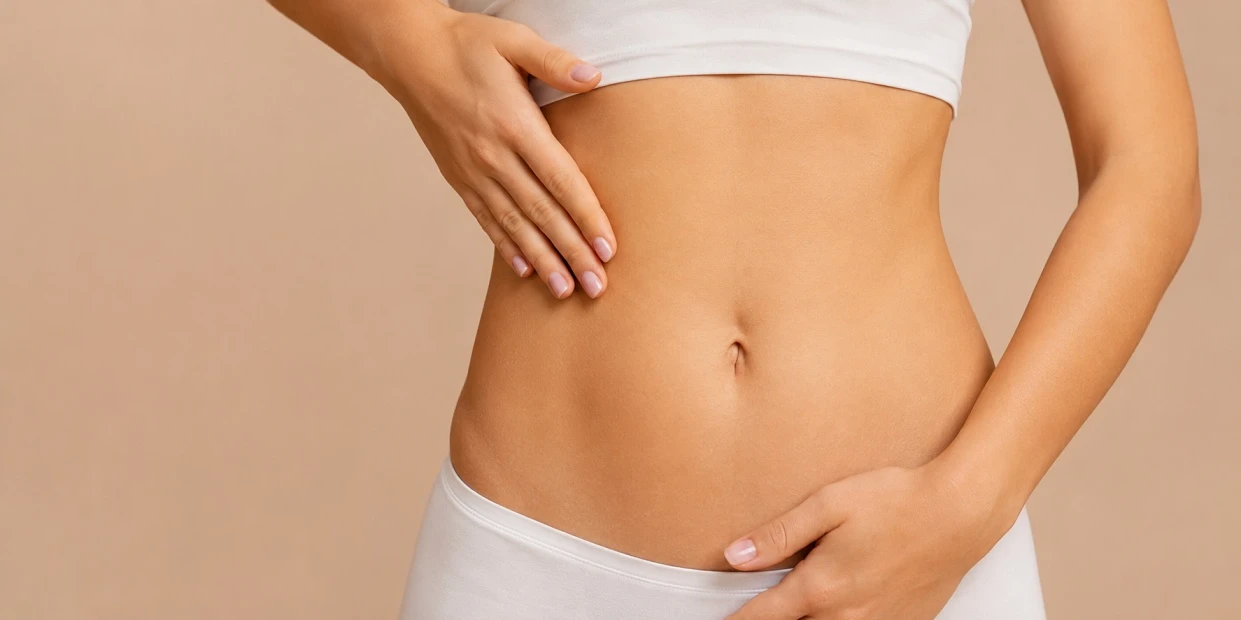
For breast asymmetry, the aim is straightforward. The smaller breast needs more volume. Fat transfer to Breast provides that volume using tissue harvested from the patient's own body - usually the abdomen, waist, flanks, inner thighs, or lower back - rather than introducing a foreign implant.
The procedure has three stages. Fat is removed from the donor area using liposuction. It is then processed - centrifuged or filtered - to separate healthy fat cells from fluid, oil, and damaged tissue. The purified fat is then injected into the breast in small, carefully placed amounts across multiple layers of tissue. That layered approach matters. It gives each transferred fat parcel the best possible chance of establishing a blood supply and surviving long-term.
The procedure is typically performed under general anesthesia, though the specifics depend on the volume being transferred and on what the surgeon and patient agree is appropriate.
Recovery involves bruising and swelling at both the donor site and the breast. Most patients are back to normal daily activities within one to two weeks. More physical activity - exercise, anything strenuous - usually waits until four to six weeks out. The swelling takes time to fully settle, and the final results are not really visible until several months have passed.
Implants are effective. They have decades of use behind them and remain a legitimate option for many women. But fat transfer appeals to a different kind of patient for specific reasons that are worth laying out honestly.
The result feels like natural tissue because it is. There is no silicone, no saline, no foreign material placed in the body. For women who are uncomfortable with the idea of an implant - whether for practical reasons or personal ones - that matters.
The scarring is minimal. Liposuction entry points are small. The injection sites in the breast are tiny. There are no long incisions.
The donor area benefits from the liposuction involved. For women who have a specific area they have wanted to reduce, the fact that the fat comes from there rather than being discarded is a straightforward bonus.
And the recovery, while real, tends to be less involved than implant surgery, particularly in terms of the breast itself.
This is where honest assessment matters more than anything else.
Fat transfer to Breast works well for women who have a genuine but moderate size difference between their breasts - roughly one cup size or less - and who want to address it without implants. The increase in volume per session is limited, so women expecting a dramatic transformation in a single procedure are often disappointed.
Adequate donor fat is a basic requirement. If there is not enough suitable fat available at the harvest sites, the procedure is simply not viable. A cosmetic surgeon will assess this during consultation. It is not something to guess at.
Stable weight is important. Fat transferred to the breast behaves like fat elsewhere in the body - it responds to significant weight changes. A woman who gains or loses a substantial amount of weight after the procedure may find that the result is affected. Women who are actively losing weight are generally advised to reach a stable point before proceeding.
Smoking directly affects how well fat is transferred and how well it survives. It compromises blood supply and healing, undermining the result. Stopping smoking well ahead of any surgical procedure is standard advice and genuinely makes a difference.
Certain medical conditions, a history of breast cancer, some clotting disorders, and other health factors can affect whether a woman is suitable for the procedure.
Transferred fat does not all survive. That is a fact of the procedure, and any surgeon who does not say it plainly is not giving a complete picture.
Typically, between 60 and 80 percent of transferred fat becomes permanent. The body gradually reabsorbs the rest over the weeks and months following surgery. Surgeons factor this in by transferring slightly more than the target volume during the procedure. But it does mean that predicting the exact final result with precision is not straightforward.
For women where fat survival is in the good range, the results are genuinely long-lasting. The fat that establishes itself does not need to be replaced or topped up on a schedule, as implants eventually do. It ages with the body naturally.
What fat transfer handles well is volume asymmetry - one breast being noticeably smaller than the other. What it handles less well, on its own, is significant differences in breast position, shape, nipple placement, or cases where sagging is part of the picture. Those situations may require a different technique, a combination of procedures, or an entirely different approach. A good breast surgeon will be direct about this rather than offering fat transfer as a universal solution.
Surgery for breast asymmetry is not a decision to make under pressure or in a hurry. Many women find it helpful to attend an initial consultation, take the information away, sit with it for a few weeks, and then decide whether to proceed. That is entirely appropriate, and any cosmetic surgeon worth consulting with will say the same.
It is also worth being clear-eyed about motivation. Addressing breast asymmetry because it has caused genuine, lasting distress and affects daily life is a different starting point from pursuing it because of a passing comparison or external pressure. That distinction matters - not as a barrier, but because the women who tend to be most satisfied with the results are the ones who went in with a clear, considered reason and realistic expectations.
Breast asymmetry is common. Feeling bothered by a significant version of it is also common and completely reasonable. For women who have quietly wanted to do something about it for years, fat transfer to the breast is a procedure that is worth understanding properly rather than dismissing or pursuing without the full picture.
Book a consultation with Dr. Jain at aestheticandcosmeticsurgeons.com.
Important: This article is written for informational purposes only. It does not replace medical advice and should not be used to make surgical decisions. Every patient is different. Anyone considering fat transfer to the breast should consult directly with a qualified, registered cosmetic surgeon who can carry out a proper individual assessment before any decision is made. All surgical procedures carry risks that need to be fully discussed with a medical professional.

ROYAL COLLEGE OF
SURGEONS

MEDICAL UNIVERSITY OF SOUTH
CAROLINA

UNIVERSITY OF SOUTHERN
CALIFORNIA

AMERICAN ACADEMY OF
COSMETIC SURGERY

AMERICAN SOCIETY OF
LIPOSUCTION SURGERY