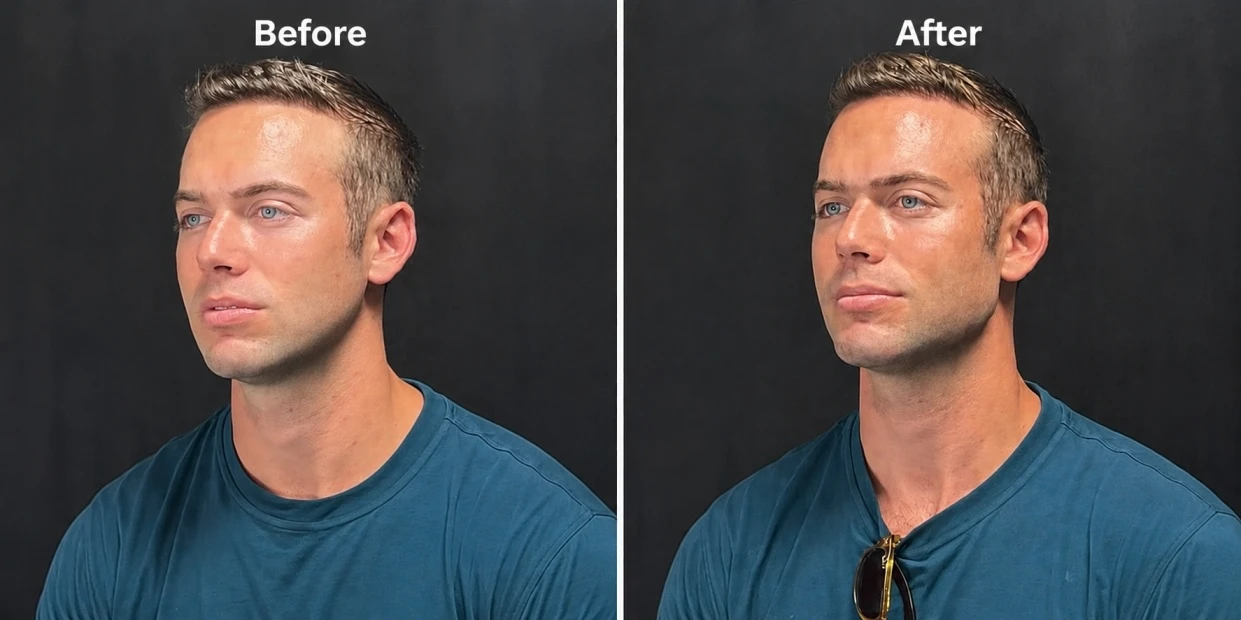


Written by the Team at Aesthetic & Cosmetic Surgeons | Medically Reviewed by Dr. Saurabh Jain, Board-Certified Cosmetic Surgeon | June 19, 2026
Rhinoplasty, medically known as a nose job, is one of the most requested facial procedures in cosmetic surgery. It's also one of the most technically complex. The nose sits at the very centre of the face, which means even small changes have a significant impact on overall facial balance, and there is very little room for error.
If you're considering rhinoplasty, the best thing you can do before your first consultation is to go in informed. Not from social media or before-and-after galleries alone, but genuinely informed about how the procedure works, what recovery actually involves, what the risks are, and how to set expectations that will serve you well throughout the process.
Here are eight things every patient should understand before having rhinoplasty.
When you meet with a skilled rhinoplasty surgeon, one of the first decisions they'll discuss with you is whether your procedure will be performed using an open or closed technique. Understanding the difference helps you have a more meaningful conversation.
In a closed rhinoplasty, all incisions are made inside the nostrils. There are no external cuts, so there is no visible scarring on the outside of the nose. The trade-off is that the surgeon has less direct visibility of the underlying structures. This approach works well for patients who need moderate, targeted changes, refining the nasal tip, reducing a small bump on the bridge, or making subtle adjustments to the overall shape.
In an open rhinoplasty, a small additional incision is made across the columella, the narrow strip of tissue between the nostrils. This gives the surgeon direct access to the underlying cartilage and bone, allowing for more precise and extensive reshaping. The small scar it leaves heals well in most cases and becomes very difficult to see once fully resolved. Open rhinoplasty is typically the preferred approach for more complex changes, revision procedures, or cases requiring structural cartilage work.
Neither approach is universally better. The right technique depends entirely on your anatomy and what you're hoping to achieve, which is why the surgeon's assessment during consultation matters so much.
Many people assume rhinoplasty is purely a cosmetic procedure. In reality, it frequently serves a functional purpose as well, and for some patients, the functional need is the primary reason for seeking surgery.
A deviated septum, where the wall between the two nasal passages is off-centre, can significantly restrict airflow and cause chronic breathing difficulties, sleep disruption, and recurring sinus issues. Structural abnormalities, previous injuries, or congenital differences can create similar problems.
Rhinoplasty can correct these functional issues at the same time as the cosmetic work. When the procedure addresses breathing, it is sometimes called a septorhinoplasty. If you have any history of breathing difficulties, snoring, or chronic nasal congestion, it's worth raising this during your consultation. A skilled surgeon will evaluate both the external appearance and the internal structure before making recommendations.
This is perhaps the most misunderstood aspect of rhinoplasty recovery, and managing expectations here from the beginning makes an enormous difference to how patients experience the process.
Swelling after rhinoplasty is substantial, and it resolves very slowly. In the first week, bruising and swelling are at their most pronounced. By weeks two to four, the majority of the visible bruising has faded, and most patients are comfortable in public. At the three-month mark, a significant amount of swelling has resolved, and the general shape of the new nose is visible.
But the nasal tip, which holds swelling longer than any other area, can take anywhere from six months to a full year to fully settle. In some cases, particularly for patients with thicker skin, it can take longer still. The final result is not the result you see at one month. It's the result you see at twelve.
Understanding this prevents the anxiety and second-guessing that many patients experience during the middle months of recovery when things don't look quite right yet. They're not supposed to. The healing process has its own timeline, and the nose at six weeks is not the nose at twelve months.
One factor that often surprises first-time rhinoplasty patients is how significantly their skin type influences what is achievable and how results look over time.
Patients with thinner skin tend to show the results of structural changes more clearly. The refined cartilage underneath is more visible through thinner skin, which can produce beautifully defined results. However, thin skin also reveals imperfections more readily, which means surgical precision is critical.
Patients with thicker or oilier skin have more forgiving coverage that can mask minor irregularities, but the skin itself holds swelling longer and may not drape as tightly over the newly shaped underlying structure. This means results can appear less defined, and the full outcome may take longer to become visible.
A good rhinoplasty surgeon evaluates your specific skin characteristics during consultation and gives you an honest picture of how your skin type will interact with the changes being made. This is not a reason to avoid the procedure; it is simply an important part of setting realistic expectations.
Rhinoplasty is a safe procedure when performed by a qualified, experienced, board-certified cosmetic surgeon. But like all surgical procedures, it carries inherent risks that every patient deserves to understand clearly before making a decision.
Potential risks and complications include:
Infection — relatively rare but possible with any surgical procedure. Signs include increased redness, swelling, warmth, or discharge after the early healing period has passed. Infections are typically treatable with antibiotics when caught early.
Bleeding — Some bleeding in the immediate post-operative period is normal. Significant or prolonged bleeding is uncommon but possible.
Breathing changes — in rare cases, rhinoplasty can affect airflow. An experienced surgeon evaluates the functional impact of proposed changes as part of the surgical plan to minimise this risk.
Scarring — In open rhinoplasty, the small columellar scar heals well in most patients, but healing varies. In rare cases, scarring can be more visible.
Skin sensation changes — numbness or altered sensation around the nose and nasal tip are common in the weeks following surgery and typically resolve as healing progresses. In rare cases, changes in sensation can persist longer.
Asymmetry — the face is naturally asymmetrical, and achieving perfect symmetry is not a surgical guarantee. Minor asymmetry is common and often improves as swelling resolves. Significant asymmetry may require revision.
Unsatisfactory results or revision surgery — rhinoplasty is among the procedures with higher revision rates in cosmetic surgery, partly because of the complexity of the nose and partly because final results take so long to appear. Revision rhinoplasty is more complex than primary surgery and typically cannot be performed until the nose has fully healed, at least one year after the initial procedure.
A thorough pre-operative consultation with a skilled rhinoplasty surgeon includes a full discussion of these risks as they relate to your specific anatomy and health history. If a surgeon doesn't discuss risks with you, that is a reason to seek a second opinion.
This might feel like an unexpected item on a pre-surgery checklist, but it is genuinely important, and any qualified rhinoplasty surgeon will raise it directly.
Rhinoplasty produces the best outcomes not just surgically but psychologically for patients who are pursuing the procedure for personal reasons, from a stable emotional baseline, with clear and realistic goals. Patients who are seeking surgery to address a specific concern they have lived with for some time, who understand what is and isn't achievable, and who have realistic expectations about results and recovery, are consistently the most satisfied patients.
Patients who are pursuing rhinoplasty because of external pressure, to match a specific celebrity's nose, during a period of significant personal difficulty, or with the expectation that the procedure will resolve emotional issues unrelated to their appearance, these situations warrant careful reflection before proceeding.
A good surgeon isn't trying to talk you out of a decision. They're making sure you're making the right one for the right reasons, at the right time. That's part of what responsible cosmetic surgery practice looks like.
Rhinoplasty is widely regarded as one of the most technically demanding procedures in all of cosmetic surgery. The structures involved cartilage, bone, mucosa, delicate blood supply, and skin respond differently to every surgeon's approach, and the margin between a natural-looking outcome and one that reads as obviously operated on is genuinely small.
The most important thing you can do is choose your surgeon carefully. Here is what to look for:
Board certification with a recognised body such as the American Academy of Cosmetic Surgery or the American Board of Plastic Surgery confirms that the surgeon has met rigorous training and examination standards.
Specific rhinoplasty experience — not just cosmetic surgery experience in general, but demonstrated experience performing rhinoplasty specifically, including complex and revision cases.
A portfolio of results that reflects the kind of outcome you're looking for, natural, proportionate, and consistent across patients with different features.
Transparency during consultation — a rhinoplasty surgeon who tells you honestly what is and isn't achievable for your specific anatomy, rather than telling you what you want to hear, is a surgeon you can trust with a procedure this significant.
Willingness to discuss risks — as covered in point five above. Any surgeon who minimises or avoids discussing surgical risks in consultation is not approaching the procedure with the seriousness it deserves.
At Aesthetic & Cosmetic Surgeons in Los Angeles, Dr. Saurabh Jain is trained at the University of Southern California, the Medical University of South Carolina, and the Royal College of Surgeons, and is a member of the American Academy of Cosmetic Surgery. Dr. Jain regularly performs both primary and revision rhinoplasty and takes on complex cases that other surgeons have declined. Consultations are one-on-one, unhurried, and built around honest assessment, not a sales process.
Everything on this list points toward the same conclusion: the consultation is where the real decision gets made.
During a thorough rhinoplasty consultation, your surgeon will evaluate your nasal structure, the bone, the cartilage, the skin, the septum, and the overall relationship of your nose to your other facial features. They will listen to what you want to change and explain what is realistically achievable given your anatomy. They will discuss the approach they recommend, the anaesthesia options, the expected recovery timeline, the risks specific to your case, and the cost of the procedure.
You should leave the consultation with clear answers to your questions, a realistic picture of what to expect, and a genuine sense of whether this surgeon is the right fit for you. If something feels unclear, ask more questions. If you're not confident in the assessment you received, a second opinion is entirely appropriate, and any reputable surgeon will support that decision.
Rhinoplasty is not a minor procedure. It is a surgical intervention on the most prominent feature of your face. It deserves the same level of research, consideration, and care that you would bring to any major medical decision.
This article was written by the team at Aesthetic & Cosmetic Surgeons and reviewed for medical accuracy by Dr. Saurabh Jain, a board-certified cosmetic surgeon based in Canoga Park, Los Angeles. It is intended to provide general educational information about rhinoplasty and should not be used as a substitute for personalised medical advice from a qualified physician.
Individual results vary. Surgical outcomes depend on a range of factors, including anatomy, skin type, surgeon skill, post-operative care, and individual healing. Any surgical procedure carries risks, and the information provided here does not cover all possible complications or outcomes.
If you are considering rhinoplasty surgery in Los Angeles, please consult directly with Dr. Saurabh Jain, who can evaluate your specific circumstances.
To schedule a rhinoplasty consultation with Dr. Jain, contact Aesthetic & Cosmetic Surgeons at 818-220-3393 or visit aestheticandcosmeticsurgeons.com. Located at 7301 Topanga Canyon Blvd, Suite 330, Canoga Park, CA 91303. Serving patients across Los Angeles, Woodland Hills, Encino, Calabasas, and the San Fernando Valley.

ROYAL COLLEGE OF
SURGEONS

MEDICAL UNIVERSITY OF SOUTH
CAROLINA

UNIVERSITY OF SOUTHERN
CALIFORNIA

AMERICAN ACADEMY OF
COSMETIC SURGERY

AMERICAN SOCIETY OF
LIPOSUCTION SURGERY