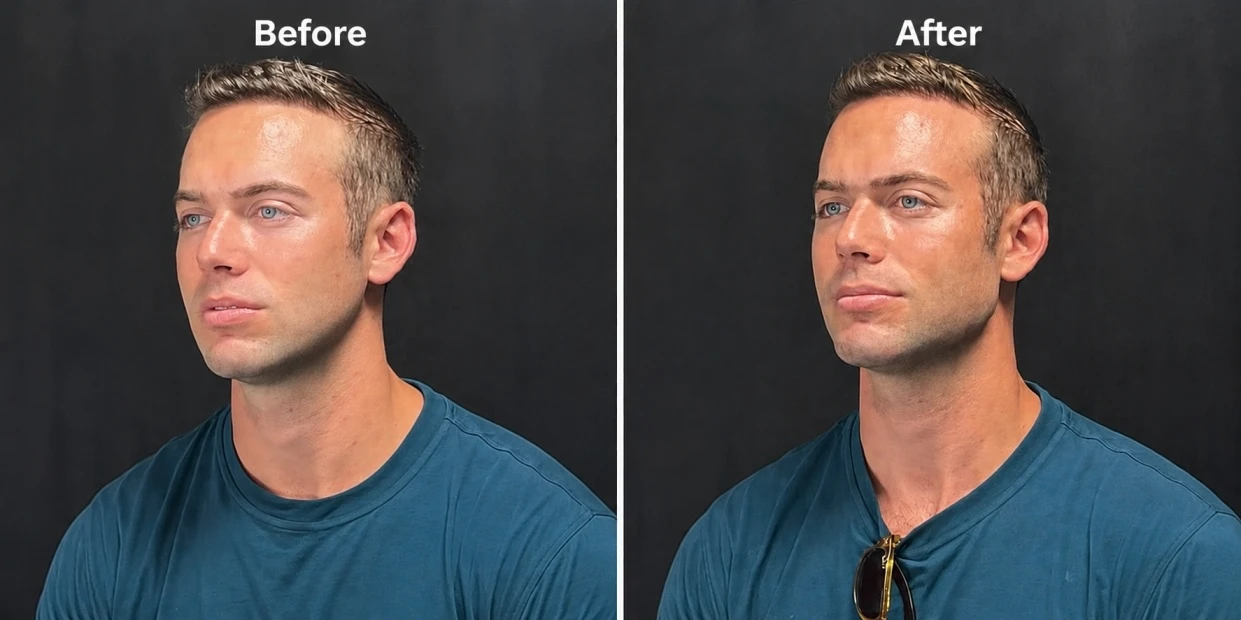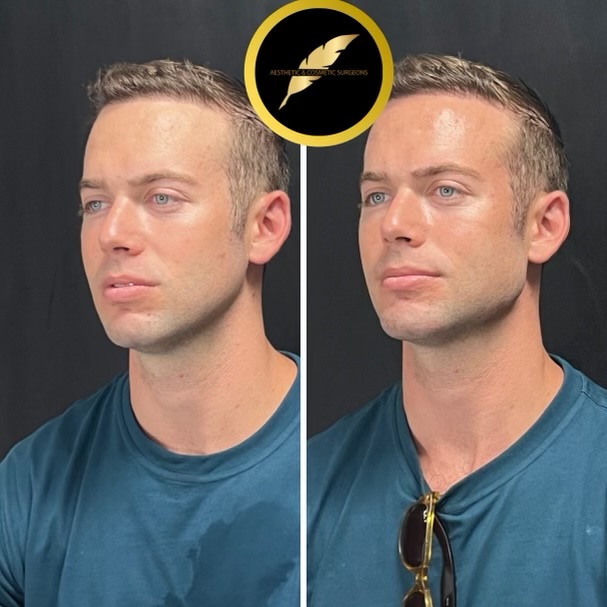


Lip filler gets most of the attention when people talk about enhancing their lips. It's quick, reversible, and there's no downtime. But there's a growing group of patients who come in not because they want more volume, but because of something subtler — the distance between their nose and their upper lip feels too long, their teeth barely show when they smile, or their lips have started to look thinner and more hidden with age.
For those patients, a lip lift is often a much better answer than filler. It's a surgical procedure, yes — but it's a small one, with a well-hidden scar, long-lasting results, and a level of precision that injectables simply can't match. Here's everything you actually need to know about it.
A lip lift is a minor surgical procedure that shortens the philtrum — the strip of skin between the base of your nose and the top of your upper lip. By removing a small amount of skin, the upper lip rolls upward and outward, revealing more of the pink lip tissue, often showing a bit of the upper teeth, and creating a more youthful, defined shape.
The most common technique is called the subnasal lip lift (sometimes called a bullhorn lift because of the shape of the incision). The small incision is placed right at the base of the nose, where it sits in the natural crease and becomes virtually invisible once healed.
It takes about 30 to 45 minutes. It's done under local anesthesia in the office. And the results are permanent.
Most patients who ask about lip lifts fall into one of two groups.
The first is patients in their 30s, 40s, or 50s who've noticed that their upper lip has lengthened and flattened over time. Aging naturally elongates the philtrum, and the pink part of the lip starts to roll inward and disappear. These patients often feel like they look tired or stern even when they're not — and lip filler hasn't quite fixed it because volume wasn't the issue to begin with.
The second group is younger patients who've always had a long philtrum or a thin upper lip. They may have tried filler and found that it either didn't give them what they wanted or made their lips look overfilled and unnatural without actually improving the shape.
Good candidates are generally patients who:
This comes up in nearly every consultation. They're not really competing procedures — they solve different problems — but it's worth understanding what each one does and doesn't do.
| Feature | Lip Lift | Lip Filler |
|---|---|---|
| Addresses Philtrum Length | ✓ | ✗ |
| Adds Volume | Indirectly | ✓ |
| Improves Lip Shape & Definition | ✓ | Partially |
| Results Duration | Permanent | 6–12 Months |
| Downtime | 7–10 Days | Minimal |
| Incision Required | Yes | No |
| Natural-Looking Appearance at Rest | ✓ | Depends on Amount Used |
| Surgical Procedure | Yes | No |
| Maintenance Required | No | Regular Touch-Ups Needed |
| Enhances Upper Lip Visibility | ✓ | Partially |
| Recovery Time | Moderate | Minimal |
Some patients do both — a lip lift for structural improvement and a small amount of filler for added softness or volume. Others find the lift alone gives them exactly what they were looking for.
The procedure is straightforward. You come in, the area is numbed with local anesthesia, and Dr. Jain removes a carefully measured strip of skin from just beneath the nose. The incision is closed with fine sutures, which are removed about a week later.
There's no general anesthesia. No hospital. Most patients feel mild pressure during the procedure, but nothing painful. Afterward, there's some swelling and bruising around the lip area that typically settles within one to two weeks.
The scar sits in the natural shadow at the base of the nose and, in most patients, becomes difficult to see within a few months. Proper technique and precise placement of the incision are critical here — this is one area where the surgeon's experience genuinely matters.
Swelling is at its peak. The lip will look more elevated than the final result. Some bruising is normal. Most patients take a couple of days off from work or social obligations. Sleeping with the head slightly elevated helps.
Swelling begins to reduce. Sutures come out around day 7. The lip still looks a little more pronounced than the final result, but it's much closer to what you'll keep.
Most patients are back to normal activities. The scar is still pink and slightly raised, which is completely normal at this stage. Sun protection over the area is important.
The scar continues to fade and soften. By around three months, most patients feel comfortable without makeup. By six months, results are considered fully settled.
This is one of the biggest advantages of a lip lift over filler. The results are permanent. The skin that has been removed doesn't come back, and the structural change to the lip shape holds over time.
The natural aging process continues, so the overall face will change with time — but the improvement in lip position and the reduction in philtrum length remains.
Yes, and it often is. Patients having a facelift or eyelid surgery sometimes add a lip lift to address the full picture of facial aging at once. Others combine it with dermal fillers or a small amount of fat transfer to the face for a more comprehensive result.
If you're considering multiple procedures, a consultation is the best place to talk through what makes sense to do together and what's better staged separately.
As with any surgical procedure, there are risks — and it's important to go into it clear-eyed. The most common concerns patients ask about are:
The scar is real, and in a small number of patients it can be more visible than expected. This is less common when the procedure is performed by an experienced surgeon using careful technique, but it's worth understanding as a possibility. The scar placement at the nose base is specifically chosen because it heals well and sits in a natural shadow.
Removing too much skin can create an unnatural, tight appearance. This is why conservative, precise measurements matter. It's better to take slightly less than to take too much — a small revision is more manageable than correcting an overcorrected lip.
Minor asymmetry is common in all facial features. In most cases, any post-procedure asymmetry is subtle and settles as swelling resolves.
Is a lip lift painful?
The procedure itself is done under local anesthesia, so you shouldn't feel pain during it — pressure and mild sensation, but not pain. Afterward, most patients describe discomfort rather than significant pain, typically manageable with over-the-counter medication.
Will the scar be visible?
In most patients, the scar fades significantly within three to six months and is not visible in conversation or in photos. Placement precision and post-operative scar care both play a role.
Can I still get lip filler after a lip lift?
Yes. Many patients do. The two procedures are compatible and some patients use a small amount of filler to fine-tune the result after the lift has fully settled.
How much does a lip lift cost in Los Angeles?
Pricing varies depending on the individual case. The best way to get an accurate figure is to come in for a consultation — we can assess your anatomy, discuss your goals, and give you a clear breakdown.
Is there an age limit for a lip lift?
There's no strict age limit. Younger patients with a naturally long philtrum are good candidates, as are older patients experiencing age-related lip changes. General health and realistic expectations matter more than age.
How is a lip lift different from a lip flip?
A lip flip uses Botox to relax the muscle above the upper lip, causing it to roll slightly outward. It's subtle, temporary, and doesn't address philtrum length. A lip lift is a permanent structural change — a fundamentally different procedure with more significant and lasting results.
That depends on what's actually bothering you about your lips. If it's volume, filler might be enough. If it's the distance between your nose and lip, the way your teeth show when you smile, or a flatness that volume alone won't fix — a lip lift is worth a serious conversation.
The best outcomes come from an honest consultation where your anatomy is assessed properly and the right procedure is recommended for your specific face — not the most popular procedure, or the one you came in asking about, but the one that will actually give you what you're looking for.

ROYAL COLLEGE OF
SURGEONS

MEDICAL UNIVERSITY OF SOUTH
CAROLINA

UNIVERSITY OF SOUTHERN
CALIFORNIA

AMERICAN ACADEMY OF
COSMETIC SURGERY

AMERICAN SOCIETY OF
LIPOSUCTION SURGERY