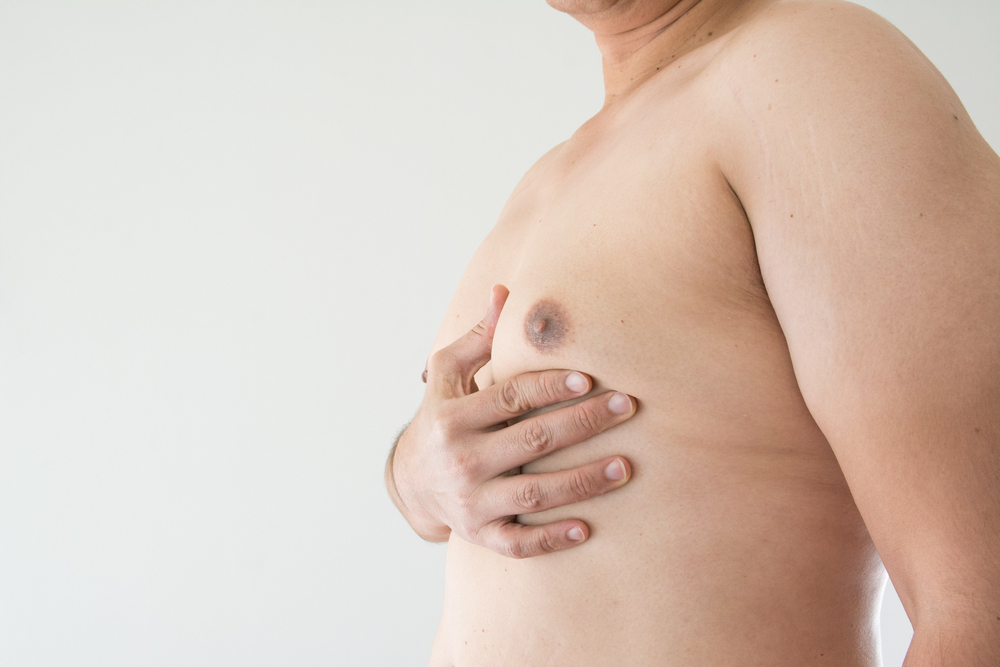

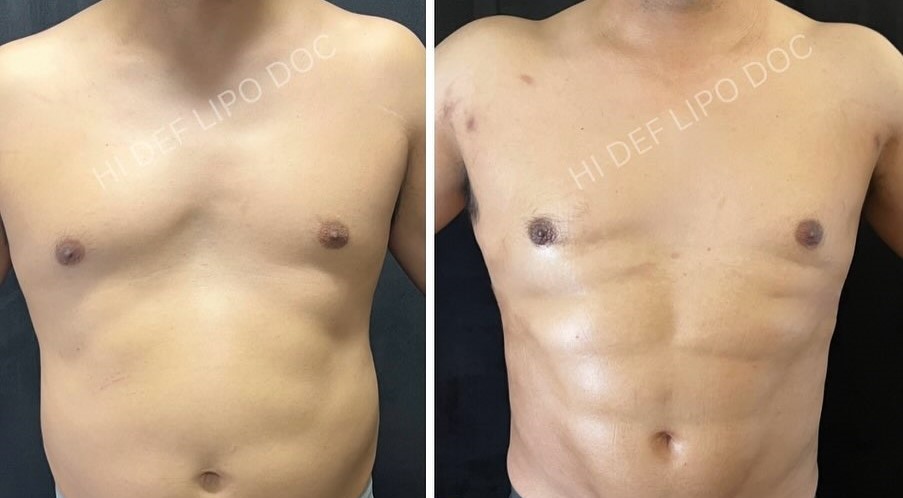
Most men feel self-conscious about their chest area, specifically when the chest gives the appearance of “man boobs.” But the thing is, many people don't realise that chest enlargement in men can be caused by 2 very different causes: gynecomastia or chest fat (pseudogynecomastia). Identifying which problem you have is the most important step, because the treatments for both causes are different.
Gynecomastia occurs due to the enlarged glandular breast tissue in males. It is not just mere fat; it is actual breast gland development, which is triggered by hormonal imbalance, or it can be developed due to high levels of estrogen or decreased testosterone.
In most teenagers, it can be resolved on its own, but in some cases, persistent gynecomastia in adults scarcely disappears without medical treatment.
When we talk about chest fat, it is a fat accumulation in the chest region without glandular overgrowth. This problem is more common in men who are overweight or obese, sedentary or genetically prone to storing fat in the chest area.
Chest fat can be improved with weight loss, cardio, and muscle training, but gynecomastia needs to be medically treated.
A qualified cosmetic surgeon like Dr. Saurabh Jain in Los Angeles can confirm the diagnosis through physical examination and imaging (if needed).
If you are looking for the best treatment for gynecomastia, a male breast reduction surgery will be the best option for you.
Depending on severity, surgeons may also employ:
Chest fat responds better to metabolic changes:
However, for stubborn fat pockets:
No, gynecomastia cannot be treated with exercise or diet. But yes, a great lifestyle can help you reduce it to some extent, but the problem will not vanish with exercise or diet. The best treatment for gynecomastia is a male breast reduction surgery.
Not directly, chest fat cannot be turned into gynecomastia. But the problem here is that fat deposits can cause hormonal changes, and hormonal changes cause gynecomastia. So, the chest fat does not directly turn into gynecomastia.
Most gynecomastia surgeries take 1–2 hours, under Local or general anesthesia, depending on the complexity. Small incisions are made; liposuction and/or gland excision are performed. Dressings and compression garments are applied to aid healing.
Yes, the male breast reduction surgery has long-term outcomes. After the excess fat is removed, it is usually not generated in the body again.
When liposuction alone is performed on patients who have fatty gynecomastia, there is typically a component of excess breast tissue that remains. By not removing it, the chest takes on a puffy nipple appearance after surgery. Many patients require a combination of both.
Yes, gynecomastia is a very common condition in men nowadays. Studies suggest that 40–60% of men experience some level of gynecomastia or pseudogynecomastia during their lifetime.
Up to 70% of men experience the development of breast tissue throughout puberty due to pubertal gynecomastia. Elevated estrogen and erratic testosterone levels are the root causes of this hormone imbalance. Nonetheless, this adolescent breast growth often disappears in six months to two years as the body adjusts hormone levels.
Yes, gynecomastia can be painful. Mild tenderness is common. Chronic cases may present without pain. Some early warning signs of gynecomastia may include Swollen, Tender Breasts, Puffy, Enlarged Nipples, Lumps or Masses in the Breast, Uneven Breast Growth, Psychological Impacts, and many more.
You may benefit from gynecomastia treatment if you:
Both Gynecomastia and chest fat can look the same, but both of them require different procedures to resolve. The correct diagnosis with the help of a skilled cosmetic surgeon ensures realistic expectations and better outcomes. Although changing lifestyle is sufficient to treat chest fat, long-lasting gynecomastia usually responds to Gynecomastia surgery.

ROYAL COLLEGE OF
SURGEONS

MEDICAL UNIVERSITY OF SOUTH
CAROLINA

UNIVERSITY OF SOUTHERN
CALIFORNIA

AMERICAN ACADEMY OF
COSMETIC SURGERY

AMERICAN SOCIETY OF
LIPOSUCTION SURGERY